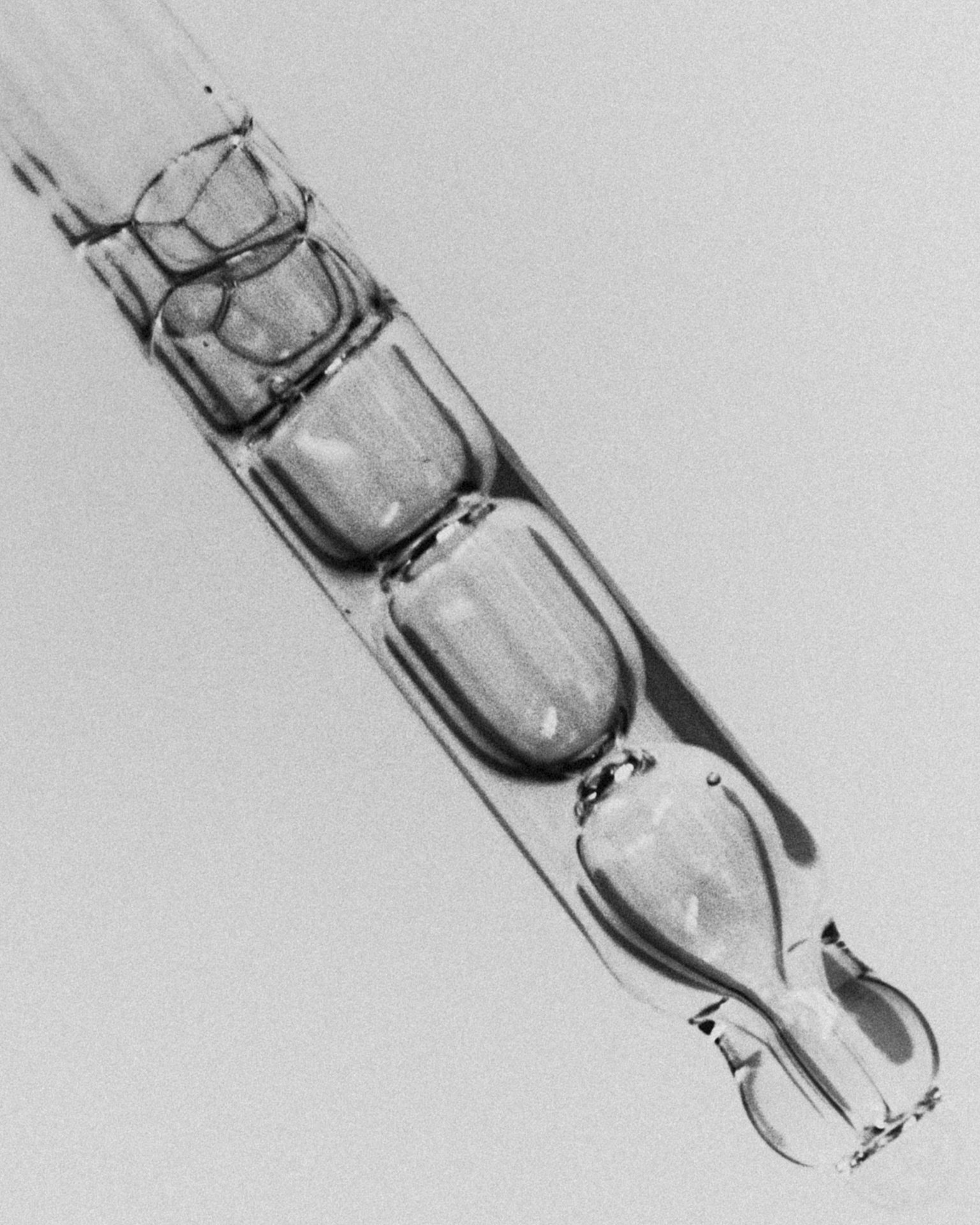
Hyaluronidase (Hylase®️)
Hyaluronidase can selectively break down unwanted hyaluronic acid fillers. The treatment, often referred to as Hylase®, is an option, for example, in cases of excessive lip volume, shifted contours, or visible filler deposits. It allows for correction if you are no longer satisfied with the current results. First, we determine whether the filler is actually causing the change and whether dissolution is appropriate.
ABOUT THE TREATMENT
What is hyaluronidase, and how does it work? This enzyme breaks down hyaluronic acid and can therefore dissolve injected hyaluronic acid fillers. Different products react to it in different ways, depending on their cross-linking and the tissue environment. Hyaluronidase does not dissolve other filler materials, such as calcium hydroxylapatite.
Before the treatment, we will discuss the area to be treated, any previous treatments, and your specific concerns in detail. Depending on the findings, either a minor correction or a more comprehensive treatment may be appropriate. We will also take any potential side effects and allergies into account beforehand.
BENEFITS OF THE TREATMENT
- Excess filler volume can be reduced if the lips or facial contours appear overfilled.
- Irregularities, migration, or visible accumulations caused by fillers can be specifically corrected.
- If necessary, a resolution provides the basis for replanning future treatment with some distance.
Dissolving Lip Fillers with Hylase®
Hyaluronic acid can accumulate over the course of multiple treatments or become visible above the lip contour. During the examination, we distinguish between existing filler, swelling, and natural tissue. We do not simply dissolve as much as possible across the board. The extent and goal of the correction are based on the actual findings.
Lumps, the Tyndall effect, and persistent swelling
Hyaluronic acid filler that is injected too superficially may appear bluish, a phenomenon known as the Tyndall effect. Palpable lumps or certain types of filler-related swelling may also be reasons for dissolving the filler. Inflammatory nodules and medical complications require a separate medical evaluation.
Dissolving hyaluronic acid under the eyes
When examining the tear trough, it is particularly important to determine whether existing filler is contributing to swelling or irregularities. Not every shadow or swelling is caused by hyaluronic acid. Only then can a decision be made as to whether hyaluronidase is appropriate for this area.
Is one session enough to dissolve the filler?
It is not possible to make a general prediction. The product, amount, location, and reaction to the enzyme all influence the course of treatment. Once any temporary swelling has subsided, a determination will be made as to whether further treatment is necessary and when a possible rescheduling can take place.